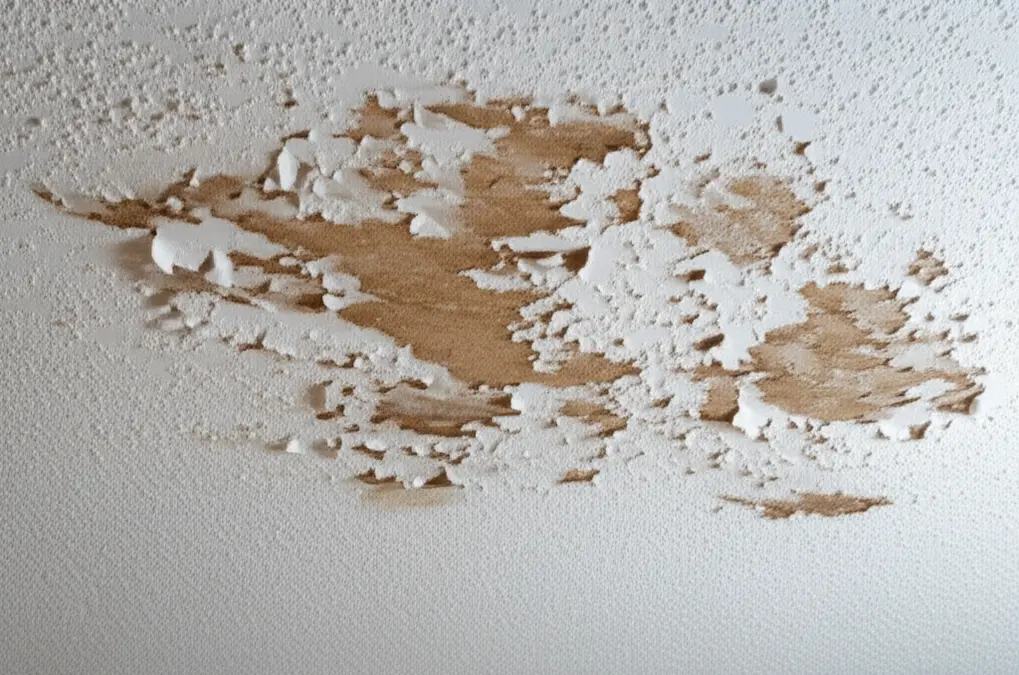
Water Damaged Ceiling Repair in Toronto: What You Need to Know
Water damaged ceiling repair is one of the most urgent home repair needs for Toronto homeowners. Toronto's harsh weather — heavy rain, ice dams, spring thaws, and burst pipes during cold snaps — makes ceiling water damage extremely common. Whether you have a small stain or a fully sagging ceiling, prompt professional ceiling water damage repair protects your home and your health.
Popcorn Free provides expert water damaged ceiling repair across Toronto and the GTA. Call 289-806-1616 for fast assessment and repair.
Common Causes of Ceiling Water Damage in Toronto
Roof Leaks
Toronto's freeze-thaw cycles are brutal on roofing materials. Ice dams form at eaves, forcing water under shingles and into the ceiling below. Heavy spring rains and summer storms also cause roof leaks that damage upper-floor ceilings. Neighbourhoods like Rosedale and Forest Hill, with their popcorn ceilings in older homess, are particularly susceptible to roof leaks due to aging roofing systems.
Burst Pipes
Toronto's cold winters bring the risk of burst pipes, especially in poorly insulated exterior walls and unheated spaces. A burst pipe can release hundreds of litres of water in minutes, causing severe ceiling damage in the rooms below. Older homes in areas like The Annex and Cabbagetown, with their original plumbing, are at higher risk during extreme cold snaps.
Plumbing Leaks
Slow plumbing leaks from upstairs bathrooms, kitchens, and laundry rooms are a leading cause of ceiling water damage. These often go undetected for weeks or months, causing extensive damage before they are noticed. Consider the older plumbing infrastructure common in High Park and Little Italy homes.
HVAC Condensation
Air conditioning systems and ductwork can create condensation that drips onto ceilings. This is common in older Toronto homes where HVAC systems were added after construction without proper condensation management. Areas like Scarborough and Etobicoke, with a mix of older and newer homes, often experience this issue.
Bathroom Moisture
Bathrooms without adequate ventilation allow moisture to penetrate ceiling materials over time. This is especially problematic in older Toronto homes with original exhaust fans or no fans at all. Neighbourhoods like Leslieville and Riverdale, with their Victorian-era homes, often require bathroom ventilation upgrades.
Types of Water Ceiling Damage
Water Stains
Brown, yellow, or dark rings on the ceiling indicate water infiltration. Fresh stains may feel damp; old stains are dry but discoloured. Stains alone do not necessarily mean structural damage, but the source must be found and fixed.
Peeling and Bubbling Paint
Water behind paint causes bubbling, peeling, and flaking. This indicates that moisture has penetrated the paint film and is affecting the ceiling surface below.
Sagging Drywall
When drywall absorbs water, it becomes heavy and loses structural integrity. Sagging drywall is a safety hazard — the water-laden material can collapse without warning. This requires immediate professional attention.
Mould Growth
Persistent moisture creates ideal conditions for mould. Black, green, or grey patches on or near the water-damaged area indicate mould growth. Mould poses serious health risks of popcorn ceilingss and must be professionally remediated.
Structural Damage
Prolonged water exposure can damage ceiling joists, weaken framing, and compromise the structural integrity of the ceiling assembly. This is the most serious form of water damage and requires professional assessment.
Water Damaged Ceiling Repair Cost in Toronto
Minor Water Damage
Moderate Water Damage
Major Water Damage
The Repair Process
Step 1: Stop the Water Source
Before any ceiling repair, the source of water must be identified and stopped. This may involve roof repair, plumbing fixes, or HVAC adjustments. We can identify the source but may refer you to a specialist (roofer, plumber) for the fix.
Step 2: Assessment
We thoroughly inspect the damaged ceiling to determine:
Step 3: Drying
The area must be completely dry before repairs begin. We ensure adequate drying time and may recommend dehumidifiers or fans for larger areas. Repairing over damp materials leads to mould and repeat failures.
Step 4: Mould Treatment
If mould is present, we treat the affected area with professional-grade antimicrobial solutions. For extensive mould, full remediation protocols are followed per Ontario health and safety standards.
Step 5: Damaged Material Removal
Water-damaged drywall, plaster, or insulation is carefully removed. We cut back to sound material, ensuring all compromised material is eliminated.
Step 6: Structural Assessment
With the ceiling open, we inspect joists and framing for water damage, rot, or weakness. Any structural issues are repaired before the new ceiling is installed.
Step 7: Replacement and Finishing
New drywall or plaster is installed, taped, and finished. We match the existing ceiling texture — whether smooth, knockdown, or other finish — for a seamless result.
Step 8: Priming and Painting
A stain-blocking primer is essential for water-damaged areas to prevent bleed-through. Then ceiling paint is applied for a clean, uniform finish.
When to Call a Professional
Call us immediately if you notice:
Do not attempt to repair water-damaged ceilings yourself, especially if you suspect structural or mould issues. Improper repairs can worsen the problem and create health hazards. Always contact a qualified professional for safe and effective water-damaged ceiling repair in Toronto and the GTA.
Understanding Toronto Building Codes and Permits for Ceiling Repair
Ceiling repairs, especially those involving structural work or significant alterations, may require permits from the City of Toronto. It's crucial to understand the relevant building codes and permit requirements to ensure your repair work is compliant and safe.
* When is a permit required? Generally, a permit is required if the repair involves:
* Altering the structural components of the ceiling (e.g., joists, beams).
* Changing the fire-resistance rating of the ceiling assembly.
* Installing or altering electrical wiring within the ceiling.
* Significant changes to the ceiling's dimensions or layout.
* The Ontario Building Code: The Ontario Building Code (OBC) sets the minimum standards for building construction and renovation in Ontario. It covers aspects such as structural integrity, fire safety, and energy efficiency. Your ceiling repair must comply with the OBC, especially if it involves structural modifications.
* City of Toronto Building Department: The City of Toronto's Building Department is responsible for enforcing the OBC and issuing building permits. You can find detailed information about permit requirements and application procedures on their website.
* Working with a qualified contractor: A reputable contractor like Popcorn Free will be familiar with the Toronto building codes and permit requirements. We can help you determine if a permit is needed and assist with the application process. Failing to obtain necessary permits can result in fines, delays, and even the requirement to undo the work.
* Specific considerations for older homes: Older homes in Toronto neighbourhoods like The Beaches and Yorkville may have unique structural characteristics that require special attention during ceiling repair. Building codes may have changed since the original construction, so it's essential to ensure the repairs meet current standards.
Preventing Future Ceiling Water Damage in Your Toronto Home
While prompt repair is crucial, preventing future water damage is even more important. Here are some proactive steps Toronto homeowners can take:
Regular Roof Inspections
Have your roof inspected annually, especially before and after gallery winter. Look for damaged shingles, loose flashing, and signs of ice damming. Address minor roof repairs promptly to prevent leaks.
Gutter Maintenance
Keep your gutters clean and free of debris. Clogged gutters cause water to back up and potentially leak into the roof and ceiling. Consider installing gutter guards to reduce maintenance.
Proper Insulation
Ensure adequate insulation in your attic and exterior walls to prevent burst pipes and ice dams. Proper insulation also helps regulate temperature and reduce energy costs. Consider upgrading insulation in older homes in areas like Little Portugal and Kensington Market.
Bathroom Ventilation
Install or upgrade bathroom exhaust fans to remove moisture. Run the fan during and after showers and baths. Ensure the fan vents to the exterior, not into the attic.
Plumbing Inspections
Have your plumbing system inspected regularly for leaks, especially in older homes. Address minor leaks immediately to prevent major water damage.
Monitor HVAC Systems
Regularly inspect your HVAC system for condensation leaks. Ensure proper drainage and consider professional maintenance to prevent issues.
Vigilance
Be vigilant for any signs of water damage, such as stains, peeling paint, or musty odours. Address any concerns immediately to prevent further damage. Early detection is key, especially in areas like North York and Markham where rapid development can sometimes overlook proper drainage.
Understanding Different Ceiling Types and Their Repair Needs
Different ceiling types require different repair approaches. Here's a brief overview:
* Drywall Ceilings: The most common type, drywall is relatively easy to repair. Small holes and cracks can be patched with joint compound. Larger sections may need to be replaced. Ceiling crack repair is a common service.
* Plaster Ceilings: Common in older Toronto homes, plaster ceilings require specialized repair techniques. Matching the existing texture can be challenging. Plaster repairs often require multiple coats and careful sanding.
* Popcorn Ceilings: While less common now, many older homes still have popcorn ceilings. Repairing water damage on popcorn ceilings can be difficult, as matching the texture is challenging. Many homeowners opt for popcorn ceiling removal and a smooth finish.
* Suspended Ceilings (Drop Ceilings): Typically found in basements or commercial spaces, suspended ceilings consist of tiles suspended in a grid. Water damage usually requires replacing the affected tiles.
* Wood Ceilings: Wood ceilings can add a unique aesthetic to a home. Water damage can cause warping, staining, and rot. Repairs may involve replacing damaged boards and refinishing the ceiling.
The best approach for repairing a water-damaged ceiling depends on the type of ceiling, the extent of the damage, and your budget. A professional can assess the situation and recommend the most appropriate solution.
DIY vs. Professional Water Damaged Ceiling Repair: Making the Right Choice
While some homeowners may be tempted to tackle water-damaged ceiling repair themselves, it's crucial to weigh the pros and cons carefully.
DIY Advantages:
* Cost Savings: DIY repairs can save money on labour costs.
* Flexibility: You can work on your own schedule.
DIY Disadvantages:
* Skill and Experience: Ceiling repair requires specific skills and experience. Improper repairs can worsen the problem.
* Safety Risks: Working at heights and dealing with potential mould exposure can be dangerous.
* Time Commitment: Ceiling repair can be time-consuming, especially for larger projects.
* Material Costs: You may need to purchase specialized tools and materials.
* Permit Issues: You may not be aware of the necessary permits and building codes.
Professional Advantages:
* Expertise and Experience: Professionals have the knowledge and experience to properly assess and repair water-damaged ceilings.
* Safety: Professionals are trained to work safely at heights and handle potential hazards like mould.
* Quality Workmanship: Professionals provide high-quality workmanship and ensure the repairs are done correctly.
* warranty information: Many professionals offer warranties on their work.
* Permit Assistance: Professionals can help you obtain the necessary permits.
Professional Disadvantages:
* Higher Cost: Professional repairs are more expensive than DIY repairs.
* Scheduling: You may need to schedule the work in advance.
When to Choose Professional Repair:
* Extensive Damage: If the water damage is extensive or involves structural issues, it's best to call a professional.
* Mould Growth: If you suspect mould growth, it's essential to have it professionally remediated.
* Lack of Experience: If you lack the skills or experience to properly repair the ceiling, it's best to hire a professional.
* Safety Concerns: If you have safety concerns about working at heights or dealing with potential hazards, it's best to leave the job to a professional.
Ultimately, the decision of whether to DIY or hire a professional depends on your skills, experience, budget, and the extent of the water damage. If you're unsure, it's always best to consult with a professional to get their opinion.
The Importance of Addressing Insulation After Water Damage
Water damage often affects the insulation above your ceiling. Wet insulation loses its R-value (its ability to resist heat flow), leading to higher energy bills and potential mould growth. It’s crucial to address the insulation as part of the repair process.
* Types of Insulation Affected: Common types like fiberglass batts, cellulose, and even spray foam can absorb water.
* Inspection is Key: After removing the damaged ceiling material, inspect the insulation for signs of moisture, mould, or compaction.
* Removal and Replacement: Wet or mouldy insulation should be removed and replaced. Consider upgrading to a higher R-value insulation for improved energy efficiency.
* Drying Out Insulation: In some cases, if the insulation is only slightly damp and hasn’t lost its shape, it might be possible to dry it out completely using professional drying equipment. However, this should only be done after a thorough assessment.
* Preventing Future Issues: Ensure proper ventilation in your attic or ceiling space to prevent moisture buildup and protect your insulation.
How Water Damage Can Affect Different Areas of the GTA
Water damage isn't uniform across the GTA. Different areas face unique challenges:
* Downtown Toronto: High-rise buildings can experience leaks from roofs or plumbing systems affecting multiple units. The density of buildings also makes it harder to detect and address issues quickly.
* Older Neighbourhoods (e.g., The Annex, Rosedale): These areas often have older plumbing and roofing systems, making them more prone to leaks and burst pipes. Plaster ceilings are also common, requiring specialized repair.
* Suburban Areas (e.g., Mississauga, Brampton): Larger homes with more complex rooflines can be susceptible to ice dams and roof leaks. Improper drainage around the foundation can also lead to basement flooding and water damage.
* Waterfront Communities (e.g., The Beaches, Oakville): Proximity to Lake Ontario can increase humidity levels, contributing to mould growth. Strong winds can also cause roof damage and water intrusion.
Being aware of the specific risks in your area can help you take preventative measures and address water damage promptly.
Frequently Asked Questions (FAQs)
How quickly should I address a water-damaged ceiling?
The sooner the better. Even a small stain can indicate a larger problem. Addressing it quickly prevents further structural damage, mould growth, and higher repair costs. Call us immediately if you see active leaks, sagging, or mould.
Will my homeowner's insurance cover water-damaged ceiling repair?
It depends on the cause of the water damage. Generally, insurance covers sudden and accidental events like burst pipes. However, it may not cover damage caused by gradual leaks, lack of maintenance, or pre-existing conditions. Review your policy and contact your insurance provider for clarification.
How can I tell if there is mould in my ceiling?
Look for visible mould growth (black, green, or grey patches), a musty odour, or water stains. If you suspect mould, do not disturb it. Contact a professional for testing and remediation.
Can I just paint over a water stain on my ceiling?
Painting over a water stain is only a temporary solution. The stain will likely reappear if the underlying moisture problem is not addressed. Furthermore, the paint may not adhere properly to the damaged surface. Always fix the source of the leak and repair the ceiling before painting. A stain-blocking primer is crucial.
Don't let water damage compromise your Toronto home. Call Popcorn Free today at 289-806-1616 for a fast, reliable assessment and expert water damaged ceiling repair. We serve all of Toronto and the GTA.