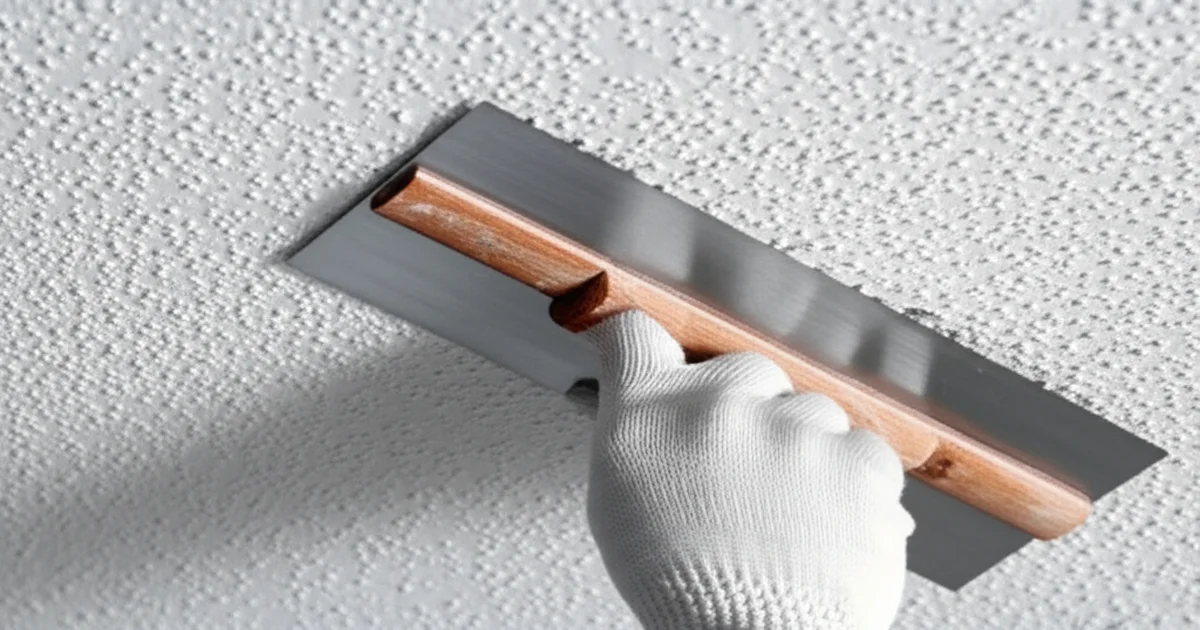
Stipple Ceiling Removal: Complete Guide for Toronto Homes
Stipple ceilings β those textured surfaces with a pattern of small, raised bumps β are found in thousands of Toronto-area homes. While similar to popcorn ceilings, stipple texture has its own unique characteristics and removal challenges. Here's everything you need to know.
What Is a Stipple Ceiling?
A stipple ceiling is a textured ceiling finish created by applying drywall compound and then pressing a brush, roller, or stomp pad into the wet compound to create a pattern of small peaks. Unlike popcorn ceilings (which are spray-applied), stipple texture is typically applied by hand.
Common stipple patterns include:
Stomp texture β Created by pressing a brush or broom into the compoundRoller stipple β Applied with a thick-nap rollerSlap brush β Created by slapping a brush against the wet compoundCrow's foot β A more artistic pattern made with a specialized brushStipple vs Popcorn: What's the Difference?
While both are textured ceilings, there are key differences:
| Feature | Stipple Ceiling | Popcorn Ceiling |
|---|
| Application | Hand-applied (brush/roller) | Spray-applied |
| Texture | Sharp peaks, defined pattern | Bumpy, cottage-cheese look |
| Material | Drywall compound | Spray texture (often with additives) |
| Asbestos risk | Lower (usually pure compound) | Higher (may contain asbestos) |
| Removal | Can be harder (compound bonds firmly) | Often easier (water-soluble) |
| Era | 1970sβpresent | 1950sβ1980s mainly |
Why Remove Stipple Ceilings?
Toronto homeowners remove stipple ceilings for the same reasons they remove popcorn:
Dated appearance β Stipple texture looks old-fashioned in modern interiorsDust and cleaning β The peaks collect dust, cobwebs, and stainsLighting β Stipple creates shadows that make rooms look darkerPaint challenges β Painting stipple ceilings evenly is nearly impossible[impact on home value](/blog/popcorn-ceiling-home-value-impact) β [smooth vs popcorn ceiling comparison](/blog/popcorn-ceiling-vs-smooth-ceiling)s add more value in Toronto's marketThe Stipple Ceiling Removal Process
Removing stipple texture requires a slightly different approach than popcorn:
Step 1: Assessment
We evaluate the stipple texture to determine the best removal method. Key factors include:
How thick the texture isWhether it's been painted (and how many times)The condition of the drywall underneathWhether there's any asbestos risk (rare with stipple, but possible)Step 2: Preparation
All furniture is moved or coveredFloors and walls are protected with plastic sheetingLight fixtures and ceiling fans are removed or coveredRoom is sealed to contain dustStep 3: Softening
Depending on the stipple type:
Unpainted stipple β Can often be softened with water, similar to popcornPainted stipple β Requires scoring first to allow water penetration, or may need direct scrapingStep 4: Removal
Using our dustless method, we carefully remove the stipple texture:
Wide drywall knives for efficient scrapingConsistent pressure to avoid gouging the drywallSystematic approach room by roomStep 5: Repair and Finishing
Drywall imperfections are filled and smoothedSkim coat applied for a perfect surfaceSanding to achieve a flawlessly smooth finishPriming for paint readinessSpecial Challenges with Stipple Removal
Stipple ceilings can present unique challenges:
Painted stipple: If the stipple has been painted (especially multiple times), the paint creates a barrier that makes the texture harder to soften and remove. This adds time to the project.
Thick application: Some stipple was applied very thickly, meaning more material needs to be removed and more drywall repair may be needed underneath.
Inconsistent texture: Hand-applied stipple can vary in thickness across a ceiling, requiring careful attention to avoid over-scraping in thin areas.
Cost of Stipple Ceiling Removal in Toronto
Stipple ceiling removal typically costs the same or slightly more than popcorn removal:
Per square foot: β $2.00β$5.00Single room: β $300β$750Full home: β $3,000β$7,500The higher end of the range applies to heavily painted or particularly thick stipple textures.
Where Stipple Ceilings Are Common in Toronto
Stipple ceilings are found throughout the GTA:
North York β 1970sβ1980s homesScarborough β Widespread in older subdivisionsEtobicoke β Common in mid-century homesMississauga β Some 1980s subdivisions used stippleBrampton β Mixed with popcorn in many [popcorn ceilings in older homes](/blog/popcorn-ceiling-older-homes)sWhy Choose Popcorn Free for Stipple Removal?
Despite our name, we're experts at removing ALL types of ceiling texture, including stipple. Our team has extensive experience with every type of stipple pattern and knows how to achieve perfect results regardless of the challenge.
Dustless removal method β Clean, efficient processLicensed & insured β Full protectionAll texture types β Popcorn, stipple, stucco, knockdown β we do it allFree estimates β Transparent pricingCall 289-806-1616 for a free estimate on stipple ceiling popcorn ceiling removal in Toronto and the GTA.
Learn more about stucco ceiling removal if you have a heavier texture type, check our Toronto pricing guide for detailed costs, or compare DIY vs professional removal approaches.
Contact Popcorn Free today β your ceiling texture experts.
Understanding Stipple Ceiling Textures in More Detail
While we've touched on common stipple patterns, let's delve deeper into the nuances of each type. Recognizing the specific texture in your Toronto home can help you understand the removal process and potential challenges involved.
Stomp Texture: The Rustic Look
Stomp texture, as the name suggests, is created by "stomping" a brush or broom into the wet drywall compound. This results in a somewhat random, textured pattern. The depth and spacing of the "stomps" can vary widely depending on the tool used and the applicator's technique.
Characteristics of Stomp Texture:
Irregular pattern: β No two stomp texture ceilings are exactly alike.Deep texture: β Often creates a more pronounced, three-dimensional effect than other stipple types.Potential for inconsistencies: β The hand-applied nature can lead to variations in texture across the ceiling.Roller Stipple: Uniformity and Repetition
Roller stipple is achieved using a thick-nap paint roller dipped in drywall compound. The roller is then applied to the ceiling in a repeating pattern. This method generally produces a more uniform and consistent texture compared to stomp texture.
Characteristics of Roller Stipple:
Repeating pattern: β The roller creates a recognizable, repeating texture.More uniform depth: β The texture is generally more consistent across the ceiling.Easier to blend repairs: β Due to the uniformity, repairs to roller stipple can often be blended more seamlessly.Slap Brush: A Delicate Touch
Slap brush texture is created by lightly slapping a brush against the wet drywall compound. This technique produces a delicate, feathered texture with soft peaks. Slap brush is often considered one of the more visually appealing stipple textures.
Characteristics of Slap Brush:
Feathered appearance: β The texture has a soft, feathered look.Subtle peaks: β The peaks are generally less pronounced than in stomp or roller stipple.Requires a skilled applicator: β Achieving a consistent and aesthetically pleasing slap brush texture requires a skilled hand.Crow's Foot: Artistic Expression on Your Ceiling
Crow's foot texture is a more artistic and less common stipple pattern. It's created using a specialized brush with multiple bristles arranged in a "crow's foot" shape. The brush is pressed into the wet compound to create a distinctive, clustered pattern.
Characteristics of Crow's Foot:
Distinctive pattern: β The crow's foot shape is easily recognizable.More artistic: β This texture is often chosen for its unique and decorative appeal.Less common: β You're less likely to encounter crow's foot texture than other stipple types.Preparing Your Toronto Home for Stipple Ceiling Removal: A Detailed Guide
The preparation phase is crucial for a successful and stress-free stipple ceiling removal project. Proper preparation protects your belongings, minimizes dust, and ensures a smooth workflow for our team. Here's a detailed breakdown of what's involved:
Protecting Your Furniture and Belongings
Moving furniture: β Ideally, all furniture should be moved out of the room being worked on. If this isn't possible, furniture should be moved to the center of the room and thoroughly covered with heavy-duty plastic sheeting.Protecting valuables: β Remove all valuable or fragile items from the room. This includes artwork, lamps, electronics, and decorative objects.Covering floors: β Floors are protected with drop cloths or plastic sheeting to prevent damage from falling debris and dust. We use a combination of materials to ensure comprehensive protection.Protecting walls: β Walls are also covered with plastic sheeting to prevent damage from scraping tools and dust. We pay special attention to edges and corners to ensure a tight seal.Sealing the Room to Contain Dust
Dust control is a top priority during stipple ceiling removal. Our dustless method significantly reduces dust, but sealing the room further minimizes its spread.
Sealing doorways: β Doorways are sealed with plastic sheeting and painter's tape to prevent dust from escaping into other areas of your home. We use specialized zipper doors to allow access while maintaining a tight seal.Covering vents: β Air vents are covered with plastic sheeting and tape to prevent dust from entering the HVAC system. This is especially important if you have forced-air heating or air conditioning.Using negative air pressure (optional): β For particularly sensitive projects, we can use a negative air pressure machine to create a slight vacuum in the room. This helps to draw dust and debris into the machine and prevent it from escaping.Removing or Covering Light Fixtures and Ceiling Fans
Removing light fixtures: β Light fixtures are typically removed from the ceiling to allow for unobstructed access. A qualified electrician may be required for this step, depending on the fixture type.Covering ceiling fans: β Ceiling fans are carefully covered with plastic sheeting to protect them from dust and debris. We ensure that the fan blades are securely wrapped to prevent them from spinning and spreading dust.Disconnecting electrical power: β Before removing or covering any light fixtures or ceiling fans, we disconnect the electrical power to the room to prevent electrical shock.Additional Preparation Tips for Toronto Homeowners
Inform your neighbors: β If you live in a condo or townhouse in areas like Liberty Village or CityPlace, it's a good idea to inform your neighbors about the upcoming work. This can help to avoid any potential complaints about noise or dust.Protect your pets: β Keep your pets away from the work area to prevent them from being exposed to dust or debris.Clear a path: β Ensure that there's a clear path from the entrance of your home to the room being worked on. This will allow our team to move equipment and materials in and out efficiently.Communicate with our team: β Don't hesitate to ask questions or express any concerns you may have before, during, or after the project. We're here to ensure your complete satisfaction.Diving Deeper into the Stipple Ceiling Removal Process: Step-by-Step
We've outlined the basic steps of stipple ceiling removal, but let's explore each stage in greater detail to provide a more comprehensive understanding of the process.
Step 1: Thorough Assessment and Testing (If Necessary)
Before we begin any removal work, we conduct a thorough assessment of your stipple ceiling. This includes:
Visual inspection: β We carefully examine the texture to determine its type, thickness, and overall condition.Paint assessment: β We assess the number of paint layers and the type of paint used. This is crucial for determining the best softening and removal method.Drywall inspection: β We inspect the condition of the drywall underneath the texture. This helps us to identify any existing damage or potential issues that may arise during the removal process.[asbestos testing in Toronto](/blog/popcorn-ceiling-testing-toronto) (if suspected): β While stipple ceilings are less likely to contain asbestos than popcorn ceilings, we may recommend testing if your home was built before the 1990s or if the texture looks unusual. We use certified labs in the GTA for asbestos testing.Step 2: Meticulous Preparation: Protecting Your Toronto Home
As previously discussed, preparation is paramount. We take extra care to protect your home and belongings from dust and damage. This includes:
Reinforcing plastic sheeting: β We use multiple layers of plastic sheeting and reinforce seams with tape to ensure a tight seal.Protecting trim and moldings: β We carefully protect trim and moldings with painter's tape and plastic sheeting.Using specialized dust collection equipment: β Our dustless method utilizes specialized equipment to capture dust at the source, minimizing its spread.Step 3: Effective Softening Techniques for Stipple Ceilings
Softening the stipple texture is essential for easier and more efficient removal. The specific technique used depends on whether the ceiling is painted or unpainted.
Unpainted stipple: β We typically use a spray bottle or pump sprayer to apply water to the ceiling. The water softens the drywall compound, making it easier to scrape away.Painted stipple: β Painted stipple requires a more aggressive approach. We may use a scoring tool to create small cuts in the paint, allowing water to penetrate the texture. Alternatively, we may use a chemical softening agent specifically designed for removing painted texture.Step 4: Precise Removal with Dustless Technology
Our dustless removal method minimizes dust and debris, creating a cleaner and healthier work environment.
Using wide drywall knives: β We use wide drywall knives to efficiently scrape away the softened texture.Applying consistent pressure: β We apply consistent pressure to avoid gouging the drywall underneath.Overlapping strokes: β We use overlapping strokes to ensure that all of the texture is removed.Vacuuming dust immediately: β Our dustless system vacuums up dust and debris as it's being created, preventing it from spreading throughout your home.Step 5: Expert Repair and Finishing for a Flawless Surface
After the stipple texture has been removed, we repair any imperfections in the drywall and prepare the surface for painting.
Filling imperfections: β We use drywall compound to fill any gouges, scratches, or holes in the drywall.Sanding: β We sand the patched areas smooth to create a seamless surface.Applying a skim coat: β In some cases, we may apply a skim coat of drywall compound to the entire ceiling to create a perfectly smooth and uniform surface.Priming: β We apply a coat of primer to seal the drywall and prepare it for painting.Addressing Common Concerns: FAQs About Stipple Ceiling Removal
How long does stipple ceiling removal take?
The duration of the project depends on several factors, including the size of the room, the type and thickness of the stipple texture, and whether it's been painted. A single room can typically be completed in one to two days, while a full home can take several days. We'll provide you with a more accurate timeline during the free estimate.
Is stipple ceiling removal messy?
Traditional stipple ceiling removal can be very messy. However, our dustless method significantly reduces dust and debris. We also take precautions to protect your home and belongings, minimizing the impact on your living space.
Can I remove stipple ceiling myself?
While DIY stipple ceiling removal is possible, it's a challenging and time-consuming project. It requires specialized tools, skills, and safety precautions. Professional removal ensures a cleaner, faster, and more efficient process, minimizing the risk of damage to your home. Consider the potential for asbestos and the time commitment before attempting a DIY approach. You might save money, but the risks and effort are significant.
What happens if asbestos is found in my stipple ceiling?
If asbestos is found in your stipple ceiling, we'll recommend hiring a certified asbestos abatement company to safely remove the texture. We can provide you with a list of reputable companies in the Toronto area. Removing asbestos requires specialized equipment and training to prevent the release of harmful fibers.
Stipple Ceiling Removal in Specific Toronto Neighborhoods
Toronto's diverse neighborhoods feature homes built in different eras, each with its own architectural characteristics. This means the type and prevalence of stipple ceilings can vary depending on the location.
The Beaches: β Many older homes in The Beaches may have stipple ceilings, often requiring careful assessment due to their age.Rosedale & Forest Hill: β While these areas are known for their upscale homes, some may still have stipple ceilings from previous renovations or earlier construction.Downtown Condos: β While less common in newer condos, older condo buildings in the downtown core may have stipple ceilings that are now considered outdated.Leaside & Davisville: β These midtown neighborhoods have a mix of housing styles, with some older homes potentially having stipple ceilings.High Park & Bloor West Village: β Similar to The Beaches, these areas have a significant number of older homes that may feature stipple ceilings.Understanding the typical housing stock in your neighborhood can help you anticipate the likelihood of encountering stipple ceilings and the potential challenges associated with their removal.
Ready to say goodbye to your dated stipple ceilings and hello to a smooth, modern look? Contact Popcorn Free today for a free, no-obligation estimate. Call us at 1-289-806-1616 to schedule your consultation. We're your trusted experts for stipple ceiling removal in Toronto and the GTA.